/eh/2025-01-08/173633966714069467/picture.png)

/eh/2024-12-24/173503345348979036/Favorite-Icon.png)
/eh/2025-07-08/1751962110204480194/picture.png)
/eh/2025-06-21/1750485478958537574/countryInfoIcon.png)
/eh/2025-06-21/1750485741321434291/Hi-Sign-in-My-Nihao.png)
/eh/2025-06-21/1750485837193896318/cart.png)
/eh/2025-06-21/1750485968202533847/cart.png)
/eh/2025-04-17/1744862476612819675/hot-img.png)
/eh/2025-11-07/1762504524550532584/header-icon.jpg)
/eh/2025-07-07/1751875582852206790/header-icon.png)
/eh/2025-07-07/1751875587886277738/header-icon.png)

Best in 7 days


Shopping security
Curiosity Is the Original Algorithm. This Toy Runs on It.
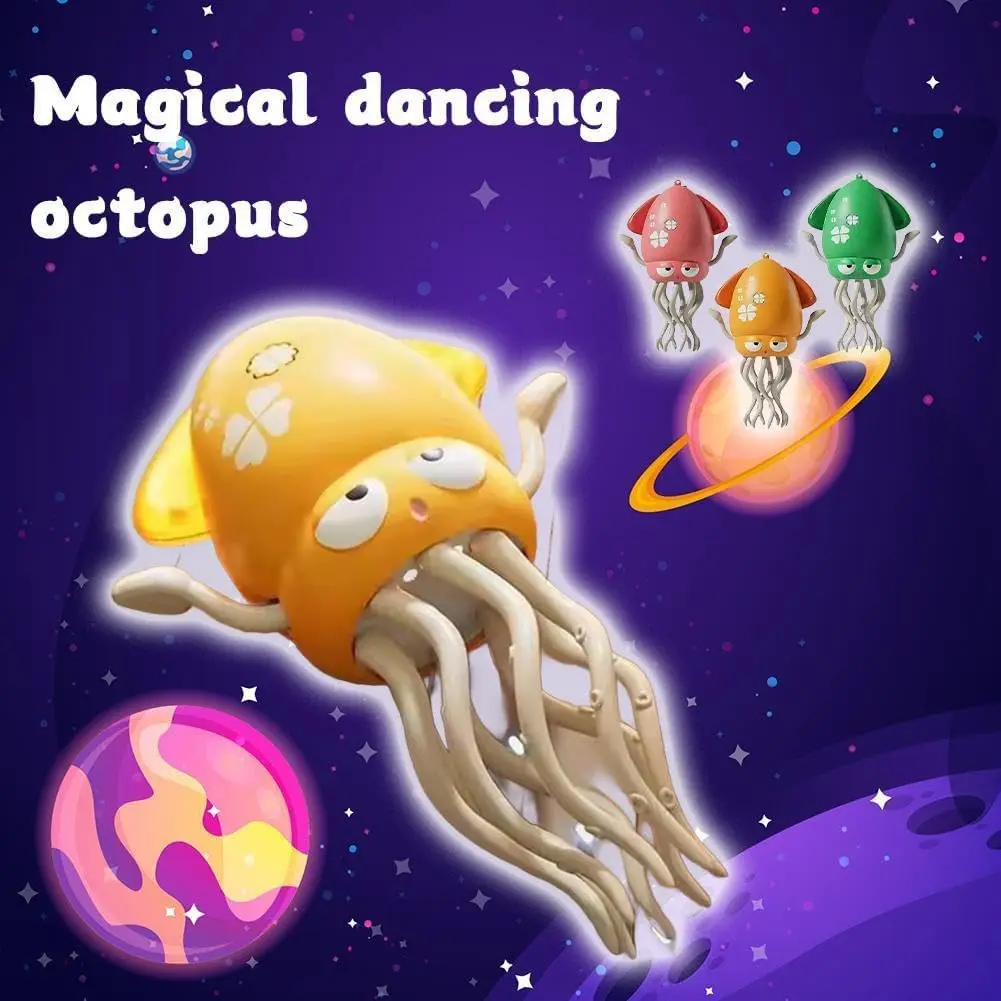
Long before children learn to code, they learn to cause and effect — the marble that rolls when pushed, the bell that rings when shaken, the octopus that dances when touched. The Abyssal Playmate transforms this primal learning loop into a compact, electric induction toy that responds to a child's presence with movement, light, and sound. No screen. No app. No subscription. Just the ancient magic of "I did something, and the world answered."
The mechanism is elegantly simple: an induction sensor detects proximity and triggers a sequence of wiggling tentacles, LED eyes, and playful audio — each response slightly varied to sustain the child's engagement across dozens of interactions. The octopus form factor is deliberately chosen: eight independently moving appendages create visual complexity that a simpler shape could not, and the marine theme introduces an early connection to ocean life that parents can extend into storytelling. The soft-touch silicone exterior is both tactile and safe for mouthing — an inevitability with the under-3 demographic — and the enclosed battery compartment eliminates the choking hazard of loose button cells.
In an era where "educational toy" too often means "tablet in a plastic shell," the Abyssal Playmate takes the harder path. It teaches without a screen. It rewards physical interaction. It builds the neural architecture of cause-and-effect, object permanence, and fine motor coordination — not through an app's notification, but through the direct, unfiltered feedback of a creature that comes alive in a child's hands.
Not every learning tool needs a USB port. Some just need a tentacle.
The Abyssal Playmate fits naturally into the daily rhythm of early childhood. For the parent seeking a travel-friendly distraction, it occupies a toddler through a restaurant meal or a long car ride without the guilt of screen time. In a playroom or daycare setting, the induction response encourages group interaction — children discover that the octopus reacts to anyone who approaches, turning it into a social catalyst rather than a solitary device. For early intervention specialists and occupational therapists, the cause-and-effect feedback loop supports the development of intentional movement and sensory processing in children with developmental delays. And as a gift, it stands apart from the sea of plastic toys that do nothing but sit there — this one moves, lights up, and responds, making it the gift that a child actually returns to, days and weeks after the unwrapping. The fishing-themed play pattern (octopus "catching" small objects) adds a secondary game mechanic that extends the toy's relevance into the preschool years.
Q: Is the toy safe for children who put things in their mouth?
A: Yes. The exterior is made of food-grade silicone — the same material used in infant teething toys. The battery compartment is secured with a screw closure and cannot be opened by a child. There are no small removable parts. The toy has been designed with the under-3 demographic's oral exploration stage in mind.
Q: How does the induction sensor work?
A: An infrared proximity sensor detects when a hand or body comes within approximately 15 centimeters of the octopus. This triggers the motor, LED, and audio responses automatically. No buttons to press — the toy simply "wakes up" when a child approaches it.
Q: Can the sound be turned off?
A: The Abyssal Playmate plays audio by design — the sound is part of the cause-and-effect learning loop. There is no mute switch. If you need quiet operation, the toy can be switched off entirely via the power switch on the base.
Q: What kind of batteries does it use?
A: 3 standard AA batteries. Alkaline batteries are recommended for longest play time. The battery compartment is enclosed with a screw-secured cover — a screwdriver is required to open it, which prevents child access.
Q: Is this suitable as a fishing game toy as described?
A: The octopus design incorporates a fishing-inspired play pattern where the tentacles can "catch" or interact with small lightweight objects. This secondary game mechanic extends the toy's developmental window — while the induction response appeals to toddlers (18-24 months), the fishing game keeps preschoolers (3-5 years) engaged as well.



Ships within 48 hours · Estimated delivery Jun 20 - Jun 25
US$40
Get nowSign up to your membership to get coupons up to
15%
Get nowOpportunity to enjoy order discount up to 15% off
Top-Converting Item to Boost Your Average Order


